Showing posts with label Ecology. Show all posts

Tuesday, 3 May 2022

Guest post by Chris Twemlow and Karoly Nemeth. The ghosts of old volcanoes in Coromandel.


Karoly Nemeth is Professor of Geology at Massey University in Palmerston North, and Chris Twemlow is Kauri Dieback Ranger for the Department of Conservation, Whitianga District. Recently we spent a weekend exploring some spectacular geological sites on the Coromandel Peninsula, as background research to a recently published paper exploring the geodiversity and geoconservation values of this area. To take a  journey through this geologically and culturally rich area read on.......


Chris Twemlow and Karoly Nemeth get up close to an outcrop of the Tahanga Basalt
on the Kuaotunu Peninsula, Coromandel. Source: Gravis (2020).


Map of the central North Island of New Zealand
showing Kuaotunu on the eastern coast of the Coromandel
Peninsula. Source: Backpack New Zealand (2020).


Geological map of the Kuaotunu Peninsula showing the main geological formations and rock types in the area. Source: Karoly Nemeth (2020).


Our own Giant's Causeway.....

Columnar jointed basalt forms as the lava cools more quickly at the surface than in the interior of the lava mass. This in turn builds up stress and this stress is dissipated through the formation of cracks running branching at 120 degrees. One of the most famous examples is The Giant's Causeway in northeastern Ireland. These formations can also be found in New Zealand, with one of the most spectacular examples forming Motutu Point, between Whangapoua Beach and Wainuiototo Bay (New Chums). This headland shows striking examples of columnar basalt, with the remains of a Māori Pā seen on the grassed slope above the columns. Another example of columnar basalt can also be seen at Mt. Cargill in Dunedin, and are known as "The Organ Pipes" due to their columnar shape.

Above and below: Basalt columns are clearly visible from New Chums Beach,
where the grassy top of Motutu Point is also visible, the site of a Pā site.
Source: Gravis (2020).


Source: Karoly Nemeth  (2020).


Above: Over time basalt columns erode and collapse leaving the foreshore
littered with boulders, while the relentless action of salt water and waves
produces distinctive features. Source: Gravis (2020)

Tahanga Basalt.

Basalt in the Coromandel  generally occurs as the Mercury Basalts, erupted 5 -8 MYA. As well as forming the columns at Motutu Point, on the Kuaotunu Peninsula the Mercury Basalt forms Mt Tahanga, and can be seen outcropping on the beach. Mt. Tahanga is a highly significant maunga, as this was the source of a particularly fine-grained basalt highly prized for tool making and widely traded throughout New Zealand prior to European settlement. The maunga is the site of several pre-European quarries, and examples of the fine grained-basalt can also be found on the beach.


Above: Rubbly outcrops of Tahanga Basalt can be seen on the foreshore below Mt. Tahanga,
with flow features visible in the eroded basalt of the shore platform. Significant
pre-European quarries where this highly prized basalt was worked are situated
further up the slopes of Mt. Tahanga. Source: Gravis (2020).


Above and Below: This detail shows three samples of Mercury Basalts all found within
a one kilometre area. The sample on the left shows a coarse grain with clearly
visible feldspars, while the sample on the right shows the very fine grained and dense
Tahanga Basalt, with no crystals visible to the naked eye. Source: Gravis (2020).


Kuaotunu Peninsula

This peninsula sits on the eastern coast of the  Coromandel Peninsula and north of  Mercury  Bay. It is a geologically diverse and culturally rich area, with a dynamic history of human settlement from the earliest human arrivals in the country to the period of the Coromandel gold rush and beyond. 
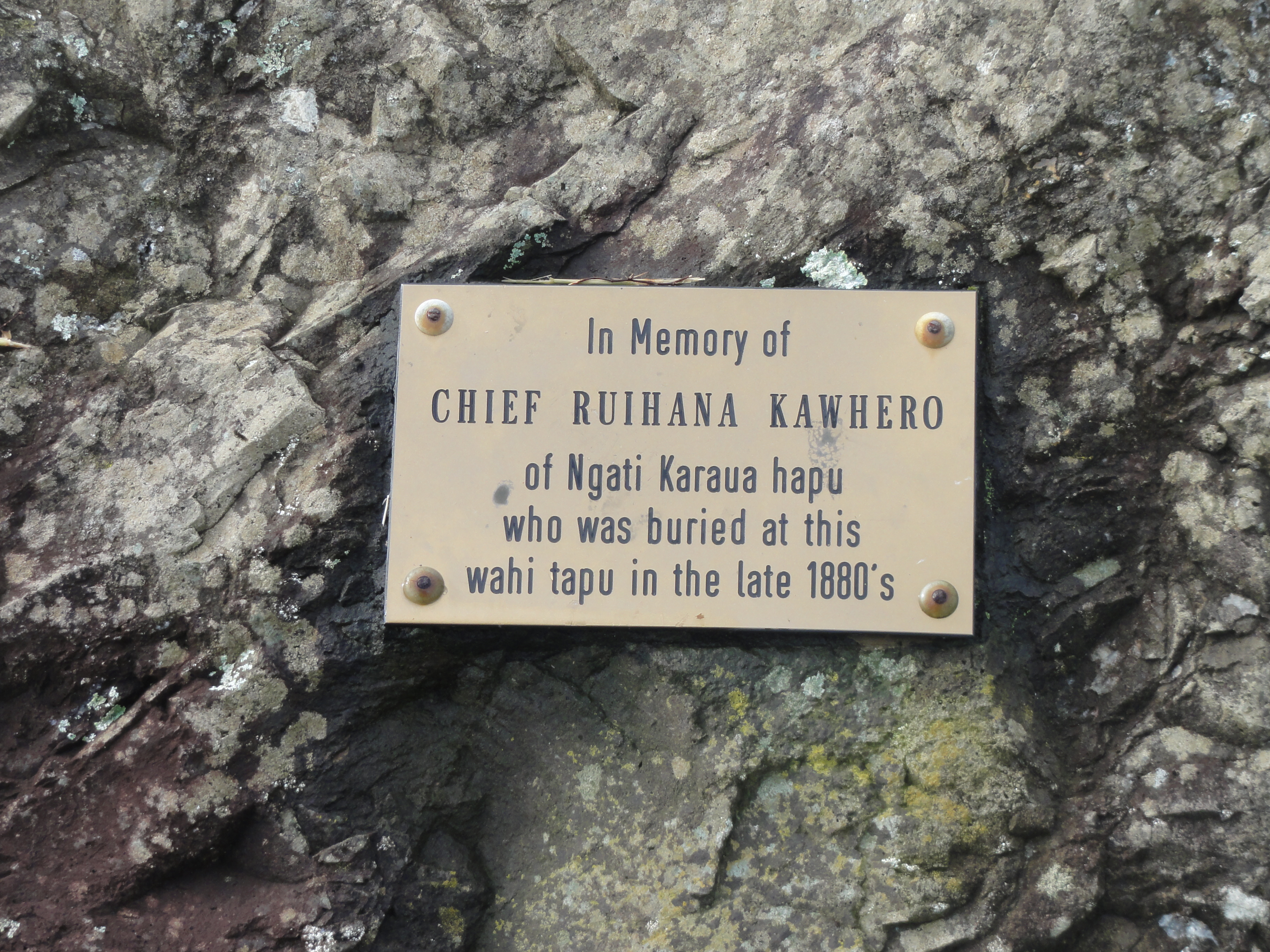


One of the highest points on the peninsula is Blackjack's Hill, which looks out towards the Mercury Islands, and to Opito Point at the end of the peninsula. Blackjack's Hill is the site of a long extinct geothermal field with signs of well preserved quartz and geothermal deposits to be found around the tracks. The details below show example of quartz-based rocks and minerals that can be found inland, and also on beaches and in rivers in the area.


Otama Dunes and Wetland.

Otama Beach forms part of the north-facing coast of the Kuaotunu Peninsula, and is significant as one of the most undisturbed beaches and associated sand-dune formations in the Coromandel. The distinctive white sands are high in quartz and silica, while active dune formations with a back-dune wetland annd associated ecology are increasingly rare. Nearby Sarah's Gully is the site of one of the earliest sites of Māori settlement in the area, with archaeological evidence in the area showing the eastern coast of the Coromandel was a thriving area of settlement up until the arrival of the first Europeans. 

Source: Davidson (2018). In search of the North Island Archaic:
Archaeological excavations at Sarah’s Gully, Coromandel Peninsula,
New Zealand, from 1956 to 1960. Tuhinga 29: 90–164


In more recent times, this area has become the focus of a significant restoration project by the Otama Reserves Group.


Above and below: Distinctive dunes are formed by pale coloured
quartz-rich sands, formed by the weathering of silica-rich volcanic
materials. Source: Gravis (2020).


Above: This area is well known for its sparkling white sand beaches. This detail
shows the high content of quartz fragments, formed by physical weathering
of silicic volcanic materials. Other volcanoc products less resistant
to erosion have been broken down by chemical weathering. Source: Gravis (2020).

Above and below: The dunes harbour a diversity of
rare and unusual vegetation adapted to life in this
sandy and harsh coastal environment.
Source: Chris Twemlow -  Otama.org.nz (2020)


Trees surrounding the estuary behind
the dunes provide a haven for nesting shags
Source: Gravis (2020).

New Chums Beach. 

Wainuiototo, more commonly known by the name New Chum Beach, is justifiably well known for its unspoilt sands and specatcular coastal outlook. Less well-known are spectacular outcrops of volcanic breccia originating from one of the main eruption centres in this area.  Brightly coloured scoria and andesitic pebbles and boulders are preserved in a matrix of ash and tephra, with weathering leaving fresh surfaces well exposed.


Above: Coastal erosion processes continuously expose
fresh surfaces, allowing a view into the volcanic
features formed during unfolding eruptive processes.
Source: Gravis (2020).


Above and below: A range of bright colours
and rock types suggest a dynamic and rapidly
evolving volcanic environment shaped by magma
chemistry, environmental conditions, and physical
parameters. Source: Gravis (2020).


Above: Erosion exposes the inner workings of a
volcano, with a dyke and layers of ash and volcanic
debris visible here. Source:Karoly Nemeth (2020).


Coromandel Granite.

This distinctive igneous rock is well known as "Coromandel Granite", though strictly speaking it is more correctly defined as a tonolite due to its mineral composition. Granitic type igneous rocks form when magma does not erupt to the surface as lava, but slowly cools underground. This slow cooling, which may take thousands to millions of years, allow the large crystals to form which are so clearly visible in these types of rocks. Over time uplift and surface erosion expose the granite body (or pluton) where we find it at the present-day surface.

The Coromandel Granite is significant because it is a very rare outcrop of plutonic rock in the North Island, with most granites found at the surface in New Zealand in the South Island. For a time it was quarried and used as a building stone, including in the Old Parliament buildings in Wellington. 

This fascinating area tells a story of volcanic processes taking place deep underground millions of years ago.It is also significant as a site of a considerable stone extraction industry, utilising a locally unique stone resource with relative ease of access and proximity to local shipping routes. However, over time the extraction and supply became uneconomic, especially in the context of an increasingly globalised stone supply industry. 

Above: The stone quarry is an hour north of Coromandel
Township, a relatively remote location on the coast via road.
At it's height of production coastal shipping provided
convenient transport between the peninsula and Auckland,
making this a well-placed location for the times as seen in
this aerial phot of the coast from 1945. Source:Retrolens.nz (2020).


Above: This zoomed detail from the image above clearly
shows the stone wharf, and nearby houses for quarry
workers. To the left can be seen a distinctive tidal
shore platform formed by the hard erosion resistant
igneous rock. Source: retrolens.nz (2020).


Above: The structure of the wharf formed by blocks
of this very hard igneous rock remain clearly
visible here. Source: Gravis (2020).


Above and below: The large crystals forming
this granitic rock are clearly visible to the naked eye.
Also cleary visible on blocks and boulders in the area
are drill holes where drills were used to break up the rock
into blocks for shipping. Source: Gravis (2020).


Above and below: Near the site of the old quarry
on the beachfront can be found a type of rock called
hornfels. This forms when surrounding rock is "baked"
and undergoes structural and chemical changes due to the
heat of the intruding magma body. Source: Gravis (2020).


Above: Parliament buildings in Wellington, showing steps and
the bases of columns made of Coromandel Granite and facings and
colums made of Tākaka Marble. Source: Te Ara - The Encycopedia of
New Zealand (2020) Photograph by Alastair McLean.


Acknowledgements 


Above: Inspiration for focusing on this area of the
North Island principally came from the book "Vanishing
Volcanoes" by Philip Moore and Homer Loyd, unfortunately
now out of print. However, our ongoing research aims to
build on this valuable work both in this region and other
areas of the country.

Above: Follow this link to a full copy of The Ghosts of Old
Volcanoes, A geoheritage trail concept for Eastern Coromandel
Peninsula, New Zealand.


"Out of the Ocean, Into the Fire" by Bruce Hayward provides
a good overview of the geological history of the Coromandel
in the context of the upper North Island.


Wednesday, 3 July 2019

Guest post by Paul Cuming. Ōi, our burrowing seabird neighbours, the northern muttonbird.


Paul Cuming is a mild-mannered librarian by day, and a seabird defender by night. Based in Tauranga, he divides his spare time between running the local branch of BirdsNZ, occasionally training teens in the art of bird banding and mistnetting, and coaching visiting backpackers in the fine art of falling off a surfboard. He is also a founding member of the Western Bay Wildlife Trust, lectures on native bird calls and kills the odd varmint in the local park.

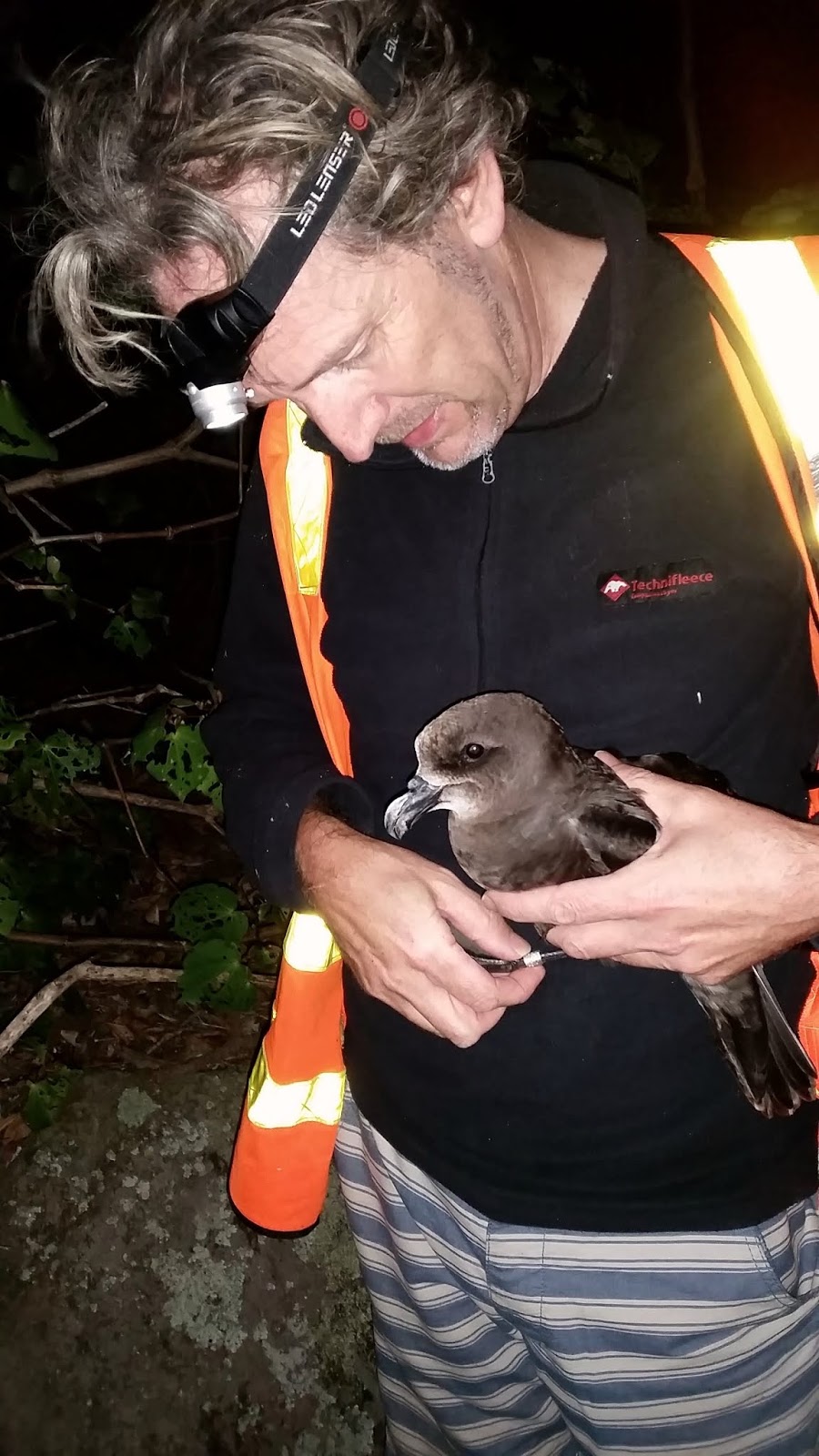
Paul Cuming and friend, grey faced petrel,
ōi, or kuia. Checking identification bands,
growth and weight during a night survey in
the Western Bay of Plenty. Source:
Paul Cuming (2018).


One of the most exciting projects Paul has been involved with is the groundbreaking successful transfer of seabird chicks from an offshore island to a mainland colony. Here in the Bay of Plenty  colonies of Pterodroma macroptera gouldi (ōi, kuia, or grey faced petrel) can be found on the Ruamaahua (Aldermen Islands) off the coast of east Coromandel, and on the Ōhiwa Headlands in our very own backyard. To find out more about this fascinating bird and the successful transfer project read on.......

There are several significant colonies of petrel on our mainland and offshore islands in Aotearoa. Most well known is the cousin to the petrel, Puffinus griseus (titī or sooty shearwater) found on the Rakiura Titī Islands (near Stewart Island), where the colony is managed and sustainably harvested for the birds most of us will be more familiar with as “muttonbird”. However, less well known is the ground-burrowing seabird called grey faced petrel, ōi or kuia,  Pterodroma macroptera gouldi

Here in the Bay of Plenty ōi can be found on the Ruamaahua (Aldermen Islands) off the coast of east Coromandel, and on the Ōhiwa Headlands in our very own backyard. Moutohorā (Whale Island) is home to one of the largest ōi populations, comprising approximately 50,000 breeding pairs. Historically this species has been harvested by tangata whenua, giving rise to it’s unofficial name the “North Island muttonbird”. In pre-European times the harvested birds were preserved in their own fat, and stored in kelp buckets. Ngati Awa, tangata whenua of Moutohorā (Whale Island) refer to this species as kuia, while more widely through the North Island it is known as ōi.

Harvesting of mainland ōi was prohibited by the Department of  Internal Affairs under the Grey Faced Petrel (Northern Muttonbird Notice (1958)) and the 1953 Wildlife Act. Mainland Harvesting is still prohibited, but the Petrel Project on Ruamaahu (Alderman) Islands includes monitoring and management of a sustainable harvest by local tangata whenua. 

The ōi is the most common species of petrel in the North Island, breeding on headlands and islands. The birds feed at sea during the day, and at sunset the birds return to their burrows, where they are nocturnally active. You are most likely to see these birds at sea in the air, or resting on the water. Feeding takes place in the open at distances over 100 kilometres from land where the continental shelf ends. Distance is no limit in the search for food, with some birds recorded flying almost as far as the east coast of Australia while the partner remains on the egg.

Ōi, or grey faced petrel as it flies above the ocean surface
seeking food off the coast of Victoria in Australia.
Source: Ed Dunens.

Satellite tagging from the Ruamaahua project shows birds frequently fly to Australia's East Coast, up past Norfolk Island to New Caledonian waters in the North, and over to the Southern Pacific Ocean around 800km South of Pitcairn Island, about 2500km East of New Zealand. Our studies have shown on Mauao (Mount Maunganui) that the same birds use the same burrows each year and 'extend' their burrows. The same groups of birds associate with one another from year to year as the metal band numbers from recaptures in the same areas each year often are only one or two digits different [banded at the same time, recaptured together]

Like all mainland nesting seabird sites, including Onekawa Te Mawhai Regional Park near Ōhiwa, ōi have had to put up with a lot of challenges to the very existence of the species. The current problem is well-established – pests introduced by humans. An additional challenge to the species, especially in the wider Bay of Plenty, is coastal erosion caused by large-scale events such as tropical cyclones. Between them, for example, Tropical Cyclones Cook and Debbie, only a month apart in 2017, carved off significant amounts of soil from our mainland study site Mauao (Mount Maunganui) which included dozens of ōi burrows. The same systems significantly damaged the canopy of the pest-free offshore island Motuotau (Rabbit Island), also home to the small cousin of the ōi, the Kuaka (Common Diving Petrel).

So, how do we know all this about ōi? In 1989, we were given the privilege of establishing the population dynamics of the ōi colony on Mauao in partnership with the Department of Conservation (DoC). Who were we? We were members of the Ornithological Society of New Zealand, an organisation which has specialised in the study of wild birds since 1939. Our control site, the pest free Motuotau, was used to compare the effects of pest control on the numbers of birds using the mainland Mauao site. Eleven years later, after the Mauao colony was shown to be viable - but with a proviso of continued pest control - Mauao was then selected by DoC to become the pioneering site for a landmark project – the successful transfer of seabirds from an existing colony to a new site. 

Marcus Richards returns a successfully fledged ōi to it's burrow 
after monitoring for growth, weight and condition. 
Source: Paul Cuming (2018).

Ōi chick nesting in an artificial burrow on Mount Maunganui. Artificial
burrows can provide a more stable habitat and
 also reduce competition for habitat. Source: Paul Cuming (2018).

Healthy ōi chick being returned to it's burrow after monitoring for
growth, weight and condition. Source: Paul Cuming (2018)


Thirty ōi chicks from Motuotau were moved to Mauao in the spring of 2000. Many ‘golden rules’ were learned, but the two I will explain are fascinating. Firstly, you must transfer chicks BEFORE they waddle out of the burrow and look at the sky. This allows a bird to return to the place they were born, in effect fixing their onboard GPS-style navigation from that point. So it is no use transferring any chicks which are older. The other is diet, what to feed the chicks after the transfer. Because you become their parents. Various tricks have been learnt since, and diet varies between types of seabirds (shearwaters and prions have subsequently been successfully transferred at other locations in the country)..  

The extra effort involved with transferring chicks to areas absent of acoustic noises of petrels was avoided by transferring chicks directly into an existing colony of adult birds making all sorts of colonial noises! So this resolved the issue of setting up acoustic anchoring sound systems, which are compulsory if transferring to starter colonies. Our project team spent time away from the site studying and helping with other species’ projects and gaining transfer knowledge; mainly on Red Mercury, Maud, Matiu, Mana and Cabbage Tree Island in New South Wales. Our project was successful and we still see some of those chicks today with bright red colour bands in addition to their metal bands. These techniques were initially developed in New Zealand for land bird species such as the Chatham Island Black Robin. So why transfer a relatively common species of bird?  

We need to go back to the Chatham Islands to find our answer - the closest species of birds to the ōi, the tāiko, or Magenta Petrel. The tāiko numbers less than 200 and the population is described as nationally critical. The tāiko needed to be transferred to a pest free area being established in the Chatham Islands, offshore of the main island where they were just hanging on. The tāiko were too precious to be experimented with, as any losses of the birds would be unacceptable on all levels, especially on a genetic level. So, in effect, we were using one species of bird to save another, by studying and learning through our mistakes - and what not to do - on a more common species.

It is important to note that this knowledge was gained  while operating in partnership with DoC, and we would not have been able to do this without their express permits or permissions. It is also of note to mention we were really only helping them carry out this pioneering work under their auspices. We were willing passengers on this journey and are still thankful this knowledge still exists under the umbrella of the Department of Conservation today - and within the leader of the transfer project, Graeme Taylor, current DoC Principal Science Advisor.

We would also like to acknowledge the work of the Ōhiwa Headlands Sanctuary Trust and the Department of Conservation in actively managing and monitoring the grey-faced petrel colony at Ōhiwa Headlands, and significant pest-control activities in the area.

Neo the Conservation Dog sniffing out a burrow during a 2014 survey
of grey-faced petrel at Ōhiwa Headlands. 
Source: Mithuna Sothieson/OHST.

If you would like to explore these fascinating birds and this project further, several articles have been published in Notornis, the magazine of the New Zealand Ornithilogical Society.


Clifford, H. J. (2001). Ten years studying grey-faced petrel  (Pterodroma macroptera gouldi) at Mauao/Motuotau. Notornis, 48(3), 183-183.

Greene, B. S., Taylor, G. A., & Earl, R.. (2015). Distribution, population status and trends of grey-faced petrel (Pterodroma macroptera gouldi) in the northern North Island, New Zealand. Notornis, 62(3), 143-161.

Jones, C. J., H.Clifford,, Fletcher, D., Cuming, P., & Lyver, P. O. 'B.. (2011). Survival and age-at-first-return estimates for grey-faced petrels (Pterodroma macroptera gouldi) breeding on Mauao and Motuotau Island in the Bay of Plenty, New Zealand. Notornis, 58(2), 71-80.

Taylor, G.A. 2013. Grey-faced petrel. In Miskelly, C.M. (ed.) New Zealand Birds Online. www.nzbirdsonline.org.nz


Popular posts